P-14 (Tall King A) Russian Mobile 2D VHF Early Warning Radar
P-14
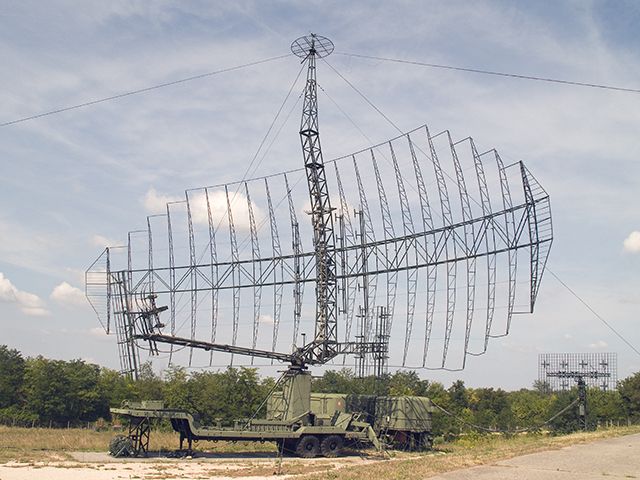
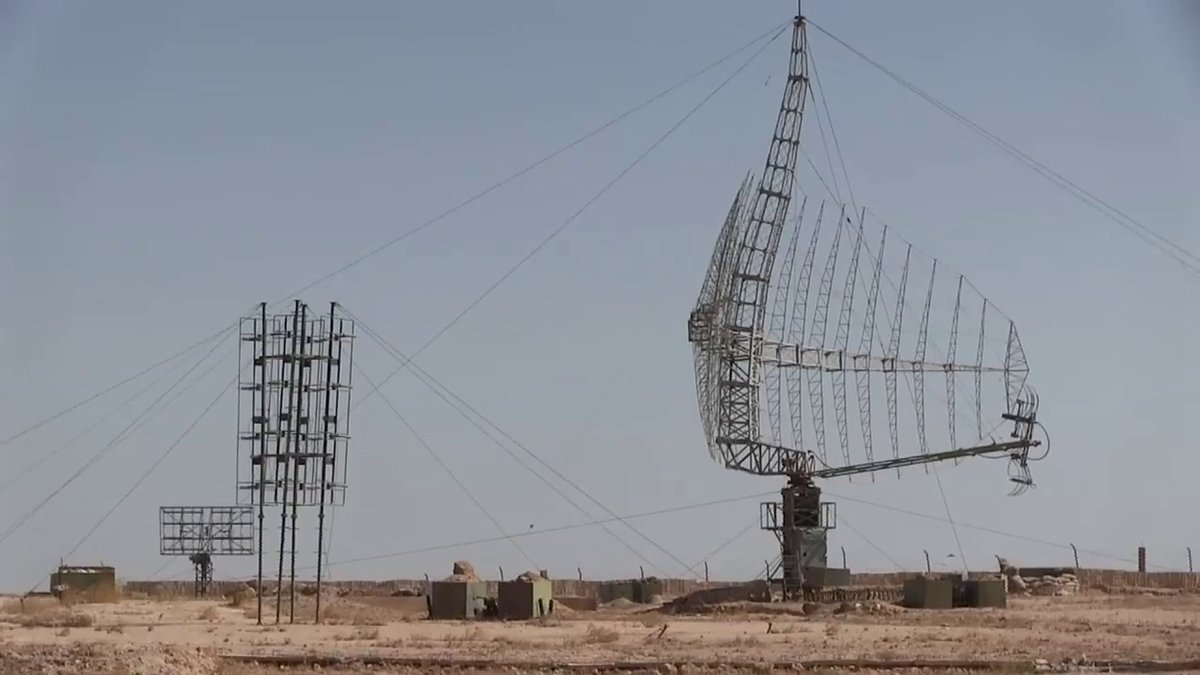
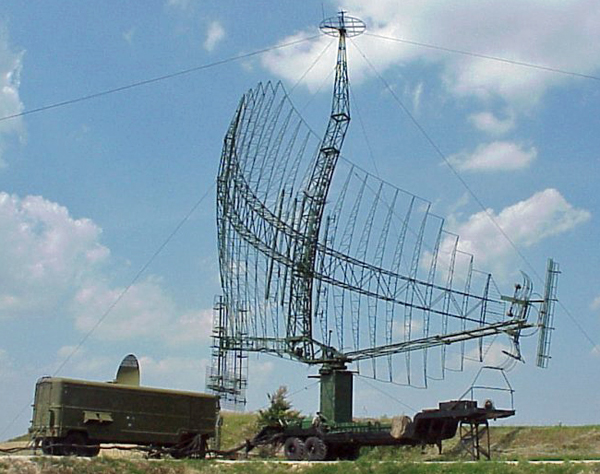
The P-14 (also referred to by the NATO reporting name "Tall King") is a 2D VHF radar that was developed and operated by the Soviet Union. The design of the P-14 2D early warning radar started in 1955 by decree of the CPSU Central Committee. The P-14 being the first high power VHF radar to be developed by the Soviet Union, the radar was accepted into service in 1959 following the successful completion of the radars test program.[2] The P-14 was developed under the direction of V.I. Ovsyannikov by the SKB Design Bureau, a division of State Plant No.197 named after V.I.Lenin, the predecessor of the current Nizhny Novgorod Research Institute of Radio Engineering (NNIIRT). The development team was awarded the Lenin prize by the Soviet Union in 1960 for the development of the P-14 radar. The P-14 was exported and is occasionally still found in service, several companies have offered upgrade options for the system, including replacement of outdated components with modern systems, such as digital MTI, modern PC based signal processing/display and solid state components. The P-14 was superseded by the 55G6 "Nebo" VHF surveillance radar in 1982. The P-14 was produced in three variants: the 1RL113 "Lena" (Tall King A) and 44Zh6 "Furgon" (Tall King B) static versions and the 5N84A "Oborona-14" (Tall King C). A total of 731 1RL113 "Lena" were manufactured between 1959 and 1976, 24 of which were for export. The 1RL113 static site was contained in two building (radar and generator) with the control cabin (operated by a crew of five) situated up to one kilometer away, the 44ZH6 operated in a similar fashion but could be relocated more easily. The 5Н84A mobile version featured a folding antenna and transported on six trailers taking over 24 hours to assemble, the radar's control trailer had a crew of six and could be located up to one kilometer from the radar. A secondary radar for IFF is generally used in conjunction with the P-14, either the NRS-12 or the later 1L22 "Parol". All of the P-14 variants were developed for the long-range detection and tracking of aerial targets and had similar performance characteristics between them.[4] All used a single antenna accomplishing both transmission and reception; the antenna was a large open-frame truncated parabolic antenna, the antenna included a heated de-icing system for extreme conditions. The radars ware capable of modulating their frequency around four preset frequencies to counteract active interference and used automatic coherent-compensation for passive interference; both systems able to suppress interference by up to 20 dB. In addition to jammer suppression the P-14 can use five auxiliary antennae for direction finding to locate the jammer. The P-14 can operate in four different modes: high beam with increased upper detection limit, low beam with increased range at low to medium altitudes and scan which alternates between high and low beam modes.