BTR-80K Russian 8x8 Amphibious Armored Command Vehicle
BTR-80K
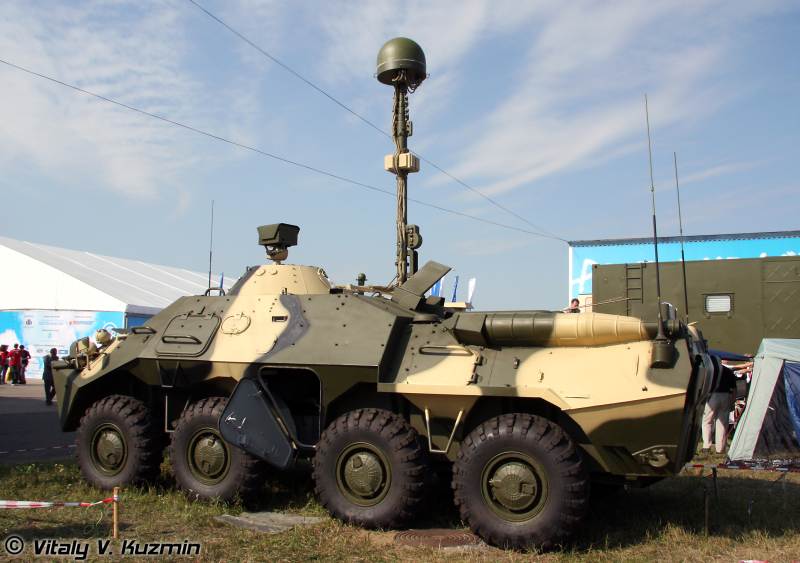
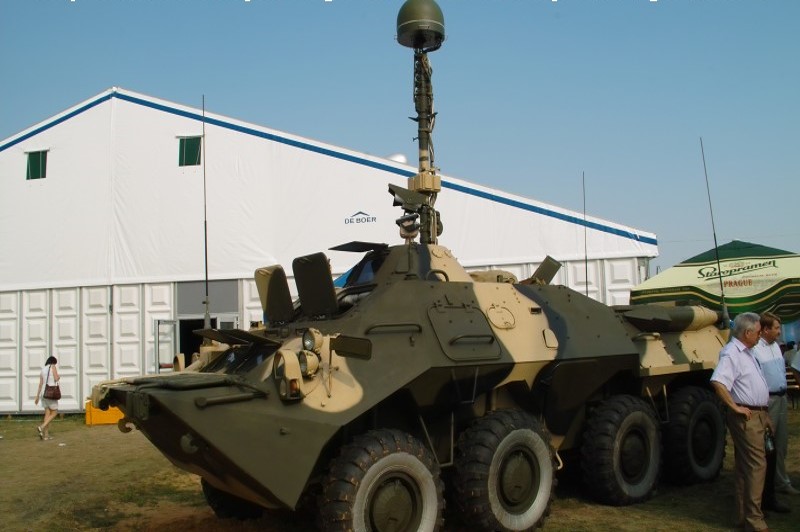
BTR-80K– command vehicle APC with telescopic antenna mast, TNA-4 navigation device and R-163-50У series of radio equipment. The BTR-80K is intended to enable the infantry battalion commander to command sub-units and maintain communications with headquarters. It is based on the BTR-80, with the same 14.5mm and 7.62mm machine guns, but has a number of extra systems necessary for this mission. These include: two VHF-173 radio sets, antenna device set for UHF antenna, IFF automatic interrogator, TNA-4 navigational aid, PAB- 2M artillery periscope aiming ring, TNP-165A night vision sight and TSh-4 interphone headsets with GVSh-T-13 head and chest set. The BTR-80 is an 8×8 wheeled amphibious armored personnel carrier (APC) designed in the USSR. The BTR-80 is a modern, lightly armored vehicle with a diesel power plant. It is manufactured at the Gorkiy Automobile Factory in Nizhniy Novgorod and has been in service since the early 1980s. The BTR-80 is a lightly armored amphibious vehicle with a collective chemical-biological-radiological (CBR) protective system. Operated by a crew of three, the vehicle can carry a squad of seven infantry troops. The BTR-80 8 x 8 armored personnel carrier is intended to carry personnel on the battlefield and provide close fire support. It can also carry out reconnaissance, combat support and patrol missions. It entered service with the Russian army in the late 1980's and has since been used in a number of military conflicts, including UN peacekeeping operations. The vehicle is in production and in service with the Russian army and with a number of other countries. The BTR-80 is superior to BTR-60/70 with a larger chassis, high-angle-of- fire turret, and single more powerful diesel engine (vs gasoline). Although the armament is same as BTR-60 and BTR-70, except for added smoke grenade dispensers on the back of the turret, the conical turret has been improved and the gun can elevate higher. The Soviets-based the BTR-80 on the BTR-70 APC. It has a single 260-hp, V-8 turbocharged, water-cooled, diesel engine, an improvement over the twin gasoline engines installed in the BTR-60 and BTR-70 vehicles. The reconfigured rear portion of the hull accommodates the new, single engine. The Soviets removed the roof chamfers of the modified BTR-70, raised the rear, and squared off the rearward-sloping engine compartment. Standard equipment includes TNPO vision blocks, TNP-B and TKN-3 optical devices for the driver and commander, an OU-3GA2M infrared search light, six 81 mm smoke grenade launchers 902V "Tucha", a radio set (R-173 or R-163-50U), an intercom, and hydro jets for amphibious propulsion. The Soviets modified the truncated cone turret used on the BTR-70 for the BTR-80 by redesigning the mantlet. This allows the 14.5 mm (0.57 in) KPVT and coaxial 7.62 mm (0.3 in) PKT machine guns to be elevated to a maximum of 60 degrees. This high angle of fire is useful in engaging targets on steep slopes, in urban fighting, and for engaging low slow flying air targets. The Soviets had also modified the design and positioning of the firing ports; the ports are now round, rather than tear-shaped, and have ball mounts similar to those used on the BMP-1. The forward firing ports now sit in angled recesses, which allows infantry to fire to the front of the vehicle. The redesigned side doors are split horizontally. The upper portion opens forward; this gives dismounting troops some protection against small arms fire from the front of the vehicle. The lower portion opens down, forming a step. Six smoke grenade projectors are mounted on the rear of the turret. The BTR-80 can climb a slope with up to 60% gradient and climb a vertical step of 0.5 m.