ARMSNET
Military Equipment Database
Initializing 0%

MEADS German Medium-Range Air Defense System

MEADS
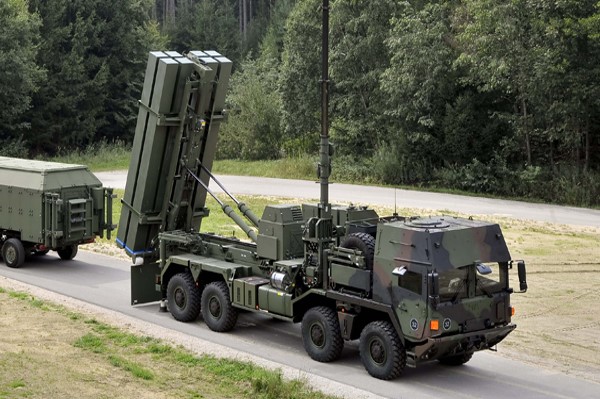
Mobile Air Defense Missile System
Spotted an error? Sign in to suggest an edit.
Basic Information
Name
MEADS German Medium-Range Air Defense System
Designation
MEADS
Alternate Designation
MEADS
Equipment Type
Mobile Air Defense Missile System
Manufacturer
The Medium Extended Air Defense System or MEADS was jointly developed by Germany, Italy and the United States.
Date of Introduction
2012
Description

Germany is considered the architect and driving force behind greater European collaboration across defense. The country has played a pivotal role in developing largescale European programs, including the development of the Medium Extended Air Defense System (MEADS). Development of the Medium Extended Air Defense System began in 2004 as a U.S.-Italian-German partnership that shared costs for a new air and missile defense (AMD) system. As member to the tri-lateral partnership, Germany shared costs for a new Integrated Air and Missile Defense (IAMD) system. The system enables coalition interoperability and regional operation and is developed to incorporate other radars and launchers – both existing and future – as part of a regional air and missile defense system. After a comprehensive review, the German Federal Ministry of Defense announced in 2015 it would make MEADS the foundation of Taktisches Luftverteidigungssystem (TLVS), its next-generation AMD system, designed to replace Patriot. The MEADS program submitted a proposal to the German Ministry of Defense in July 2016 to continue Lockheed Martin’s development partnership with MBDA and use MEADS technology as the basis for Germany’s next-generation TLVS.

Ground Specifications
Mobility Type Wheeled (8x8)
Engine Diesel (440 hp)
Active Protection None
Max Speed 88.0 km/h
Range 750.0 km
System
Alternative Designation MEADS
Type Medium-Range Air Defense System
Manufacturer The Medium Extended Air Defense System or MEADS was jointly developed by Germany, Italy and the United States.
Mission The main role of the MEADS is to defend maneuver forces and key installations against aircraft, helicopters, UAVs, as well as tactical and short-range ballistic missiles (with a maximum range of up to 1 000 km), and cruise missiles.
Crew INA
Chassis Components of the German MEADS systems are based on MAN SX45 military trucks.
Displacement Time INA
Emplacement Time INA
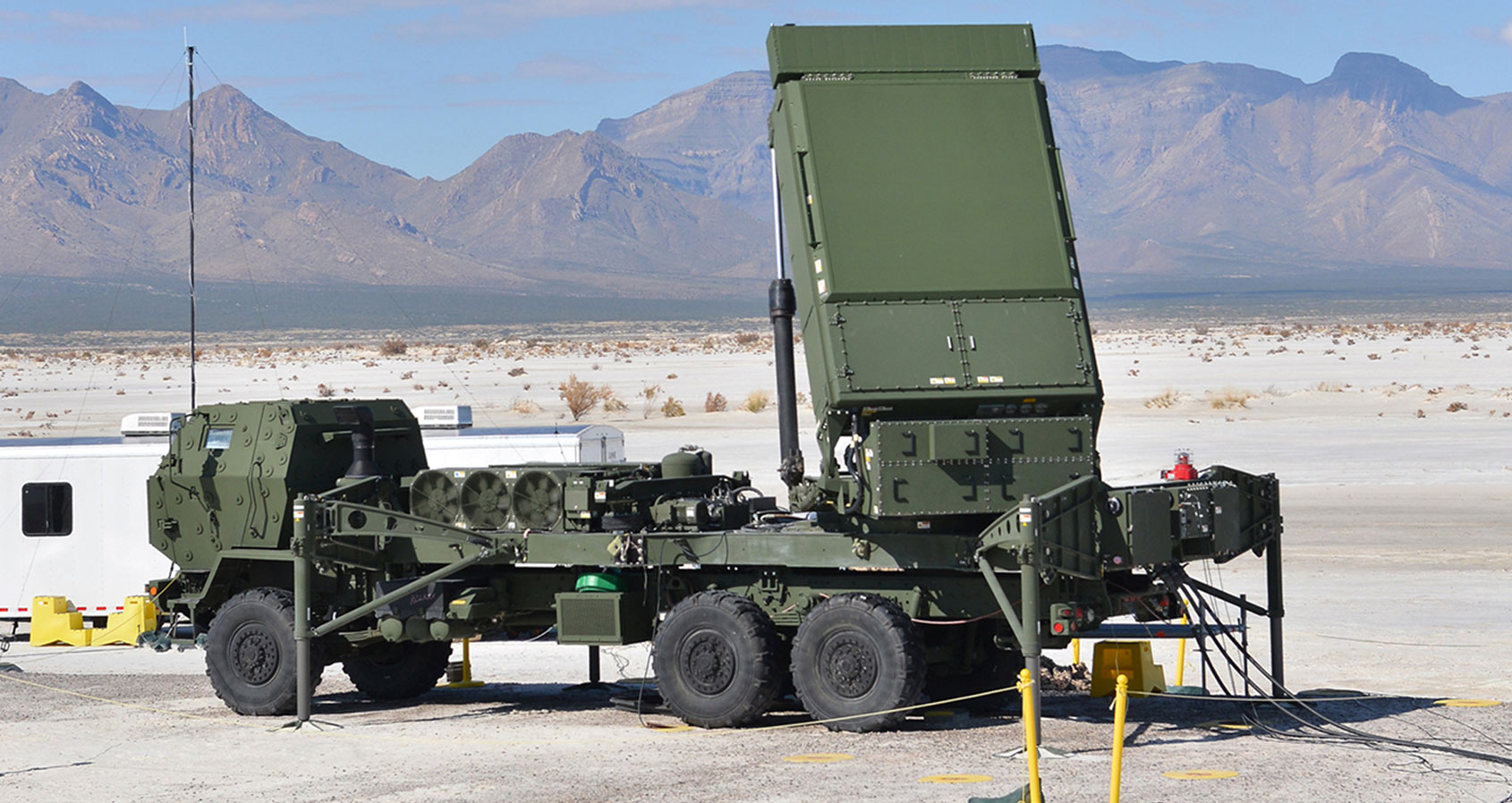
Note The complete battery includes six launcher vehicles, one surveillance radar, two multifunctional fire control radar, two battle management systems, and reloading vehicles, that carry spare missiles for the launchers.
Dimensions
Length 10.5 m
Width 2.55 m
Height 3.92 m
Weight, Empty 13 tons
Weight, Combat INA
Automotive
Engine Name MAN D2066 LFG
Engine Type Diesel
Engine Power 440 hp
Cruising Range 750 km
Speed, Maximum Road 88 km/h
Speed, Average Cross INA
Speed Maximum Swim Not Amphibious
Gradient 60 %
Side Slope 40 %
Vertical Step 0.6 m
Trench 1.9 m
Fording Depth up to 1.5 m
Missile System
Name MIM-104F Missile
Type Surface-to-Air Missile
Length 5.21 m
Diameter INA
Fin Span INA
Missile Weight 312 kg
Warhead Type HE-FRAG
Warhead Weight INA
Maximum Range 40 km
Maximum Altitude 20 km
Elevation MEADS launcher fires nearly vertically at a 70° launch position
Traverse 360 deg
Basic Load Each launcher vehicle of the MEADS is equipped with 12 missiles.
Reload The MEADS launchers use a palletized load handling system. So the whole set of 12 missiles can be rapidly reloaded.
Note This missile is highly maneuverable and destroys targets by ramming them. Yet still it has a small HE-FRAG warhead to enhance the kill probability.
Fire Control
Fire Control System
Name INA
Computerized FCS Yes
Direct Fire Yes
Indirect Fire Yes
Battle Management Systems 2 x Battle Management Systems. The battle management system is basically a command and control element of the MEADS. It provides battle management for the launcher units. It calculates optimal engagements and sends firing commands to the launcher vehicles. At least two launchers can fire simultaneously in order to defended against multiple threats or massed missile attacks.
Radar #1
Name INA
Type Surveillance Radar
Frequency/Band INA
Range INA
Coverage 360 deg
Note The surveillance radar provides long-range detection of low radar cross-section objects. This radar operates below detection frequency of current anti-radiation missiles.
Radar #2
Name INA
Type Fire COntrol Radar
Frequency/Band X-band solid-state phased array radar with an Active Electronically Scanned Array (AESA).
IFF Yes
Note It provides precision tracking and discrimination and classification capabilities. The radar uses its main beam for missile guidance, eliminating the need for a separate guidance array.
Protection
Hull Armor The MAN SX45 is also available with an integrated armored cab, which provides protection against 7.62x51 mm armor-piercing rounds, artillery shell splinters and withstands 8 kg anti-tank mine blast. An integrated cab can be equipped with remotely controlled weapon stations, fitted with a 12.7 mm heavy machine gun or 40 mm automatic grenade launcher.
Applique Armor The MAX SX family has a modular cab, which can be fitted with add-on armor protection kit. This kit was jointly developed by MAN and Krauss-Maffei Wegmann. It provides protection against 7.62x39 mm rounds, artillery shell splinters, grenades, small anti-personnel mines. Armored modules are attached to the outside of the cab. Armored kit can be installed within 10 hours in field conditions.
Explosive Reactive Armor No
Active Protection System No
Mine Clearing No
NBC Protection INA
Smoke Equipment INA
Details
Country of Origin Germany
Category Radar Guided Missile Systems
Land > Air Defense > Radar Guided Missile Systems
Filter Label
M
Classification
Domain
Ground
Equipment Status
Active
Dimensions
Length
10.5 m
Width
2.55 m
Height
3.92 m
Weight
13000 kg
Operators (3)
United States
Germany
Italy
Something went wrong. Please reload the page. Reload