Gerbera Russian Unmanned Aerial Vehicle (UAV)
Gerbera

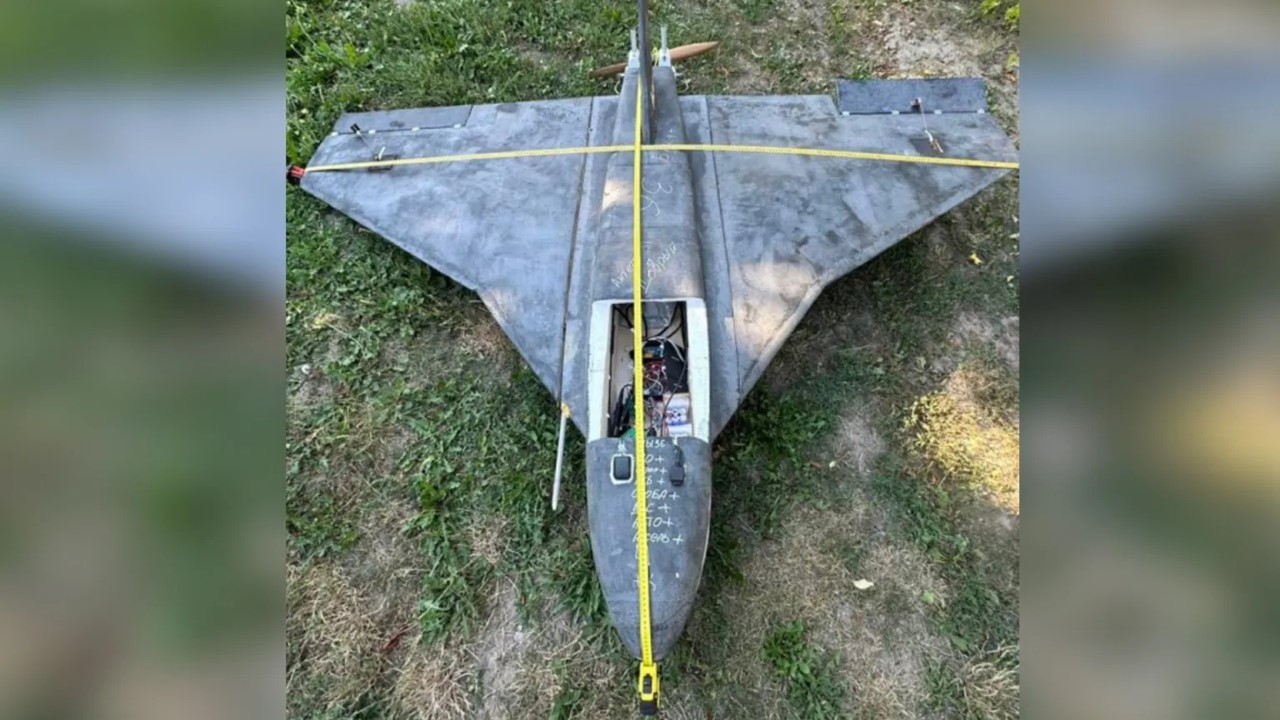
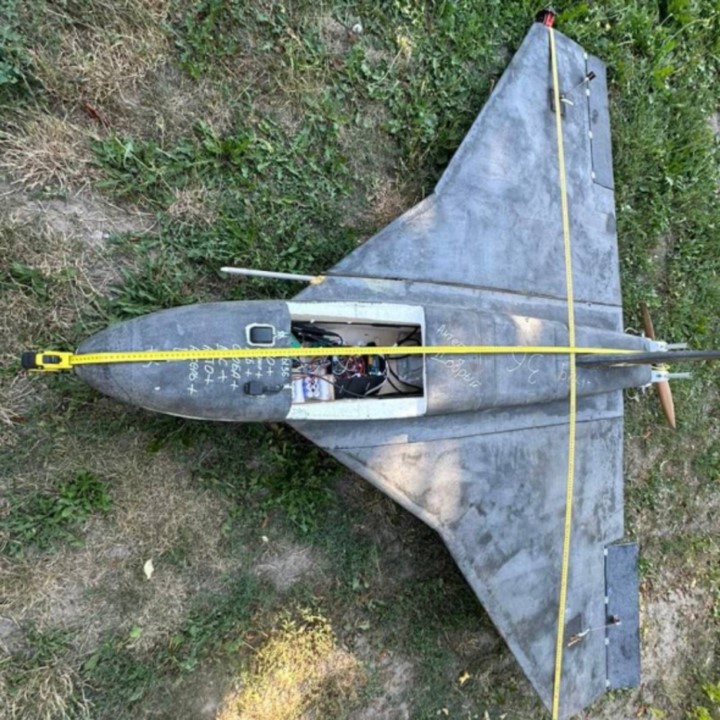
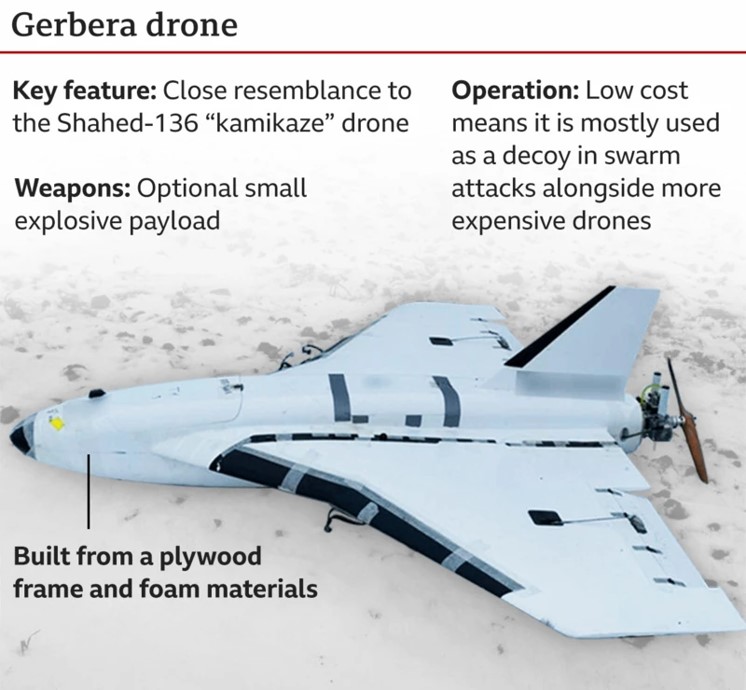
The Gerbera Russian Unmanned Aerial Vehicle (UAV) is specifically designed to saturate Ukrainian air defenses and impose long-term strategic exhaustion on critical air defense assets. It has quickly become a cornerstone of Russia's airstrike doctrine, allowing the Kremlin to conduct persistent low-cost attacks that focus not on infrastructure but on undermining the logic and economy of Ukrainian air defense operations. First observed in operational use in mid-2024 and proliferating rapidly throughout 2025, the Gerbera drone bears a resemblance to the Iranian-made Shahed-136 in appearance but differs significantly in terms of performance, purpose, and complexity. Instead of serving as a precision loitering munition, the Gerbera is optimized for simplicity, mass production, and expendability. It is a fixed-wing, propeller-driven drone made from non-strategic materials, including foam, laminated plywood, and lightweight plastic composites. Navigation is based on a GNSS autopilot, often incorporating low-cost GLONASS or GPS modules with pre-programmed waypoint routing. Once launched, Gerbera drones operate autonomously without a real-time control link, and many lack telemetry capability altogether, which enhances their operational deniability and makes jamming difficult. Some variants of the Gerbera are entirely unarmed and serve solely as decoys, designed to replicate the radar signature and flight profiles of more lethal drones or cruise missiles. However, more advanced models are equipped with small explosive warheads located in the nose or mid-fuselage compartments. These warheads typically carry between 3 and 5 kilograms of high-explosive payload and are effective against soft targets such as fuel storage facilities, radar dishes, unarmored vehicles, and military supply depots. Some recovered units have also featured small fragmentation warheads, thermobaric mini-charges, or improvised steel ball payloads intended to inflict anti-personnel effects on exposed positions. While a single Gerbera cannot destroy hardened targets or urban infrastructure, its limited lethality is compensated for by its volume. During one coordinated strike, Ukrainian air defense operators reported that a swarm of Gerbera drones overwhelmed radar coverage, allowing a follow-up volley of Shahed-136s to reach a critical substation near Kryvyi Rih. A significant factor in the Gerbera's effectiveness is its cost. Ukrainian intelligence estimates that the average price of a drone ranges from $ 500 to $ 2,000. In contrast, launching even a short-range surface-to-air missile, such as an IRIS-T or NASAMS interceptor, costs tens of thousands of dollars. This creates a stark economic mismatch. Additionally, Russia's ability to produce Gerbera drones in large numbers is a key element of its continued use. Unlike the Shahed, which requires more specialized components and centralized assembly lines, Gerbera drones are manufactured in a decentralized manner. Defense officials in Kyiv assess that Russia is currently producing between 400 and 600 units each month. Production relies on a combination of state-run factories and informal workshops, including those in occupied Ukrainian territories such as Luhansk and Donetsk. The availability of 3D printing, CNC foam cutters, and commercially available electronics facilitates rapid scaling of production.
deagel.com: https://www.deagel.com/x/x/a004700