Spike LR I Israeli Anti-Tank Guided Missile (ATGM)
Spike LR I
Anti-Tank Guided Missile (ATGM)
Spotted an error? Sign in to suggest an edit.
Other

Basic Information
Name
Spike LR I Israeli Anti-Tank Guided Missile (ATGM)
Designation
Spike LR I
Alternate Designation
Spike LR I
Equipment Type
Anti-Tank Guided Missile (ATGM)
Manufacturer
Rafael Advanced Defense Systems Diehl Defence (Now part of Rheinmetall Defence Electronics)
Date of Introduction
1997
Description
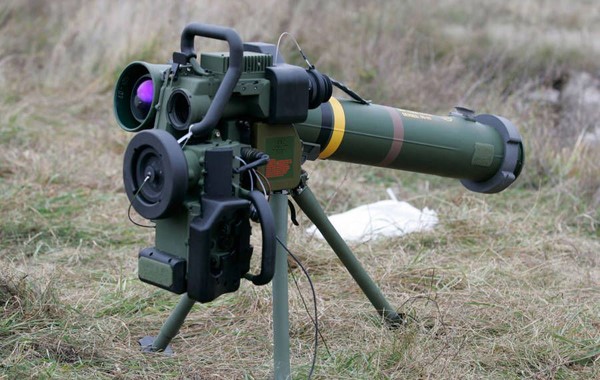
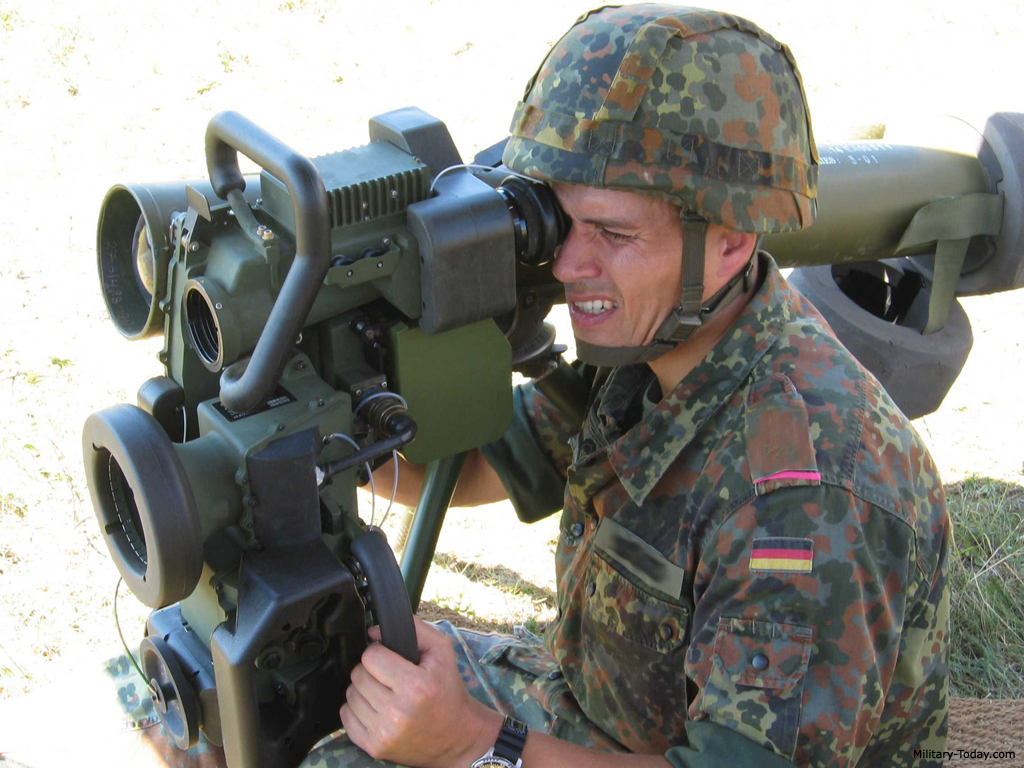
The Spike LR is an advanced anti-tank guided missile, developed in Israel. It is produced by Raphael. Letter "LR" in the designation stands for "Long Range". It was publicly revealed for the first time in 1997. This missile was known in Israel as NT-Spike, Gomed, or Dandy. However, in 2002 it was renamed the Spike LR.
Ground Specifications
Crew
1
Main Weapon
Spike LR
Range
4.0 km
Variants
Spike-SR
The short-range version of the weapon was unveiled in 2012 to give infantrymen a guided missile between the larger Spike-MR and unguided rockets. The missile is 8 kg (17 lb 10 oz) for a 9.8 kg (21 lb 10 oz) disposable munition for use at platoon-level whose minimum range is 50 m (160 ft) and whose maximum range is 1.5 km (0.93 mi). It is equipped with a stiff-necked uncooled electro-optical infrared seeker and advanced tracker, as opposed to the gimballed seeker in the Spike MR/LR/ER versions. The Spike-SR does not require a separate sight, instead of utilizing the low-cost thermal camera and guidance electronics strapped to the missile's nose to provide this function through a display integrated into the launcher, showing the target until launch. The warhead can either be a multi-purpose tandem-shaped-charge warhead with blast-fragmentation effect or a new Penetration-Blast-Fragmentation (PBF) variant leveraged from the MATADOR's anti-structure warhead to equip maneuvering forces in urban environments to breach enemy cover and structures with a lethal blast effect. In May 2016 Rafael concluded deliveries of Spike-SR to its first export customer, later revealed to be the Singapore Armed Forces to replace the Carl Gustaf M2.
Spike-MR
The medium-range version (Israeli designation: NT-Gil). The weight of the missile is 14 kg (30 lb 14 oz), its minimum range is 200 m, while its maximum range is 2,500 m (1.6 mi). It is used by infantry and special forces.
Spike-LR
Long-range version (Israeli designation: NT-Spike). The weight of the missile is 14 kg (30 lb 14 oz), and the weight of the complete system is less than 45 kg (99 lb 3 oz). The maximum range is 4,000 m (2.5 mi) and it is used by infantry and light combat vehicles. It adds fiber-optic communication to and from the operator during flight. Reported armor penetration capability is more than 700 mm (28 in) of Rolled homogeneous armor (RHA). It is also deployed by Sentry Tech remotely controlled weapons stations along the Gaza border. In early 2014, Rafael revealed they had increased the range of the Spike-LR to 5 km (3.1 mi), enhancing versatility on existing firing platforms and allowing it to be utilized on new ones like light helicopters.
Spike-LR II
A new generation of the original Spike-LR is in full-scale development and scheduled to be operational by the end of 2018. Spike-LR II (Israeli designation: Gil-2, גיל 2) has reduced weight to 12.7 kg (28 lb), increased range of 5.5 km (3.4 mi) at ground level and 10 km (6.2 mi) from helicopters using an RF data-link, warhead options of tandem HEAT with 30% increased armor penetration or a multipurpose blast warhead with selectable impact or penetration detonation fusing, a new seeker that includes an uncooled IR sensor with a smart target tracker with artificial intelligence features, the ability to fire on-grid target coordinates using an inertial measurement unit for third party-target allocation, and is compatible with legacy launchers. The missile is designed with a counter-active protection system (CAPS) capability, being able to hit targets at higher impact angles of up to 70 degrees. First ordered by the IDF in October 2017.
Spike-ER
Extended range or extra-long range version of the weapon (Israeli designation: NT-Dandy or NT-D). It has a minimum range of 400 m and a maximum range of 8,000 m (5.0 mi). It has a larger diameter and is heavier than the other systems, and is usually vehicle-mounted. It is used by infantry, Light Combat vehicles (LCVs), and helicopters. The Finnish Navy's Coastal Jaegers and Philippine Navy's Multi-purpose Attack Craft Mk.III also operates this version in the anti-ship role. The weight of the missile is 34 kg (74 lb 15 oz), the launchers are 30 kg (66 lb 2 oz) and 55 kg (121 lb 4 oz) respectively for the vehicle and air-launched versions. Penetration is around 1,000 mm (39 in) of RHA.
Spike-ER II
In August 2018, Rafael disclosed the development of an enhancement of the missile called the Spike-ER II. It retains the same weight, airframe, surface geometries, and propulsion unit but introduces a two-way RF data-link to increase real-time control to an extended range of 16 km (9.9 mi) from helicopters; it also has an extended fiber optic link to increase the range to 10 km (6.2 mi) from land and naval platforms.
Spike NLOS
"Non-Line Of Sight" is an ultra-long-range version of the weapon (Israeli designation: Tamuz, תמוז), with a claimed maximum range of 25 kilometers (16 miles). It is a significantly larger missile than other Spike variants, with an overall weight of around 70 kg (154 lb 5 oz). It can be launched from the ground or from helicopters. It was developed following lessons learned in the Yom Kippur War, which showed a need for a high-precision-guided tactical ground-to-ground battlefield missile. The first variants entered service with the IDF in tandem with the Perth missile carrier in 1981, though the existence of both was not revealed to the public until 2011. The Spike NLOS uses a fiber optic link similar to other Spike versions, but only out to 8 km, after which it employs a radio data link for command guidance.
Mini-Spike
On 2 September 2009, at an IDF exhibition held at the 3rd Latrun annual land warfare conference, the Israeli Defense Force unveiled a new member of the Spike family of missiles – the Mini Spike Anti-personnel guided weapon (APGW). Rafael claimed that this latest member of the Spike family of missile costs and weighed only a third of the Spike-LR at 4 kg (8.8 lb) while offering a longer engagement range of 1.3–1.5 km (0.81–0.93 mi) when compared to the Spike-SR. It was to introduce new flight modes to enable precision strikes in urban areas, such as flying through an open window or attacking an enemy hidden behind defilade or obstacles using non-line-of-sight engagement. Mini Spike would use the same launcher and sight system of the Spike-LR, loading the missile on a special adaptor. By 2016, Mini-Spike development had been discontinued.
System
Alternative Designation
Spike LR I
Type
Israeli Anti-Tank Guided Missile (ATGM)
Manufacturer
Rafael Advanced Defense Systems
Diehl Defence (Now part of Rheinmetall Defence Electronics)
Crew
1 ea
Guidance System
Electro Optic CCD or dual (CCD/IR) via fibre optics
Warhead
Blast/fragmentation or HEAT
Maximum Range
4,000 m
Minimum Range
200 m
Time of Flight
INA
Fire-and-Forget
Yes
Fire, Observe, and Update
Yes
Dimensions
Length in Canister
1,200 mm
Diameter in Canister
130 mm
Weight, Launcher Complete
13 kg
Weight, Missile in Canister
13.5 kg
Weight, Firing Post
9 kg
Weight, Battery
1 kg
Weight, Tripod
3 kg
Weight, Adaptor
INA
Weight, Control Unit
5 kg
Image Sources
Details
Country of Origin
Israel
Category
Land
Land
Filter Label
S
Classification
Domain
Ground
Equipment Status
Active
Dimensions
Length
—
Width
—
Height
—
Weight
13 kg
Operators (28)
Germany
United Kingdom
Israel
Italy
South Korea
Poland
India
Czech Republic
Spain
Australia
Azerbaijan
Belgium
Canada
Chile
Colombia
Croatia
Ecuador
Finland
Latvia
Lithuania
Peru
Portugal
Romania
Singapore
Slovakia
Slovenia
Thailand
CFE Treaty
Something went wrong. Please reload the page.
Reload