ARMSNET
Military Equipment Database
Initializing 0%

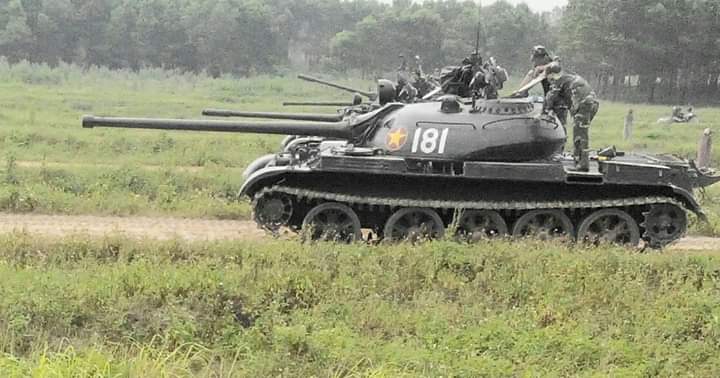
T-54 Russian Main Battle Tank (MBT)

T-54

Main Battle Tank (MBT)
Spotted an error? Sign in to suggest an edit.
Basic Information
Name
T-54 Russian Main Battle Tank (MBT)
Designation
T-54
Alternate Designation
T-54
Equipment Type
Main Battle Tank (MBT)
Manufacturer
KhPZ, UVZ (Soviet Union) Bumar-Łabędy (Poland) ZTS Martin (Czechoslovakia)
Date of Introduction
1949
Description

Hezbollah Proliferation. The T-54 and T-55 tanks are a series of Soviet main battle tanks introduced in the years following the Second World War. The first T-54 prototype was completed at Nizhny Tagil by the end of 1945. Initial production ramp-up settled for 1947 at Nizhny Tagil, and 1948 for Kharkiv were halted and curtailed as many problems were uncovered; the T-34-85 still accounted for 88 percent of production through the 1950s. The T-54 eventually became the main tank for armored units of the Soviet Army, armies of the Warsaw Pact countries, and many others. T-54s and T-55s have been involved in many of the world's armed conflicts since the later part of the 20th century. The T-54/55 series eventually became the most-produced tank in military history. Estimated production numbers for the series range from 86,000 to 100,000. They were replaced by the T-62, T-64, T-72, T-80, and T-90 tanks in the Soviet and Russian armies, but remain in use by up to 50 other armies worldwide, some having received sophisticated retrofitting. During the Cold War, Soviet tanks never directly faced their NATO adversaries in combat in Europe. However, the T-54/55's first appearance in the West around the period of the 1950s (then the beginning of the Cold War) spurred the United Kingdom to develop a new tank gun, the Royal Ordnance L7, and the United States to develop the M60 Patton. Production of the initial series of T-54s began slowly as 1,490 modifications were made. The Red Army received a tank that was superior to World War II designs and theoretically better than the newest tanks of potential opponents. The 100 mm gun fired BR-412 series full-caliber APHE ammunition, which had superior penetration capability when compared to the T-34 that it replaced. The serial production version, designated T-54-1, differed from the second T-54 prototype. It had thicker hull armor (80 mm on the sides, 30 mm on the roof, and 20 mm on the bottom). As production ramped up, quality problems emerged. Production was stopped and an improved T-54-2 (Ob'yekt 137R) version was designed. Several changes were made and a new turret was fitted. The new dome-shaped turret with flat sides was inspired by the turret from the IS-3 heavy tank; it is similar to the later T-54 turret but with a distinctive overhang at the rear. It also had a shorter bustle. The fender machine guns were removed in favor of a single bow-mounted machine gun. The transmission was modernized and the track was widened to 580 mm. The T-54-2 entered production in 1949, at Stalin Ural Tank Factory No. 183 (Uralvagonzavod). In 1951, a second modernization was made, designated T-54-3 (Ob'yekt 137Sh), which had a new turret without side undercuts, as well as the new TSh-2-22 telescopic gunner's sight instead of the TSh-20. The tank featured the TDA smoke-generating system. A command version was built, the T-54K (komandirskiy), with a second R-113 radio.

Ground Specifications
Crew 4
Mobility Type Tracked
Main Weapon 100 mm gun
Engine V-12 water-cooled. 38.88-l diesel (500 hp)
Active Protection ZET-1
Variants
T-55A In 1961, development of improved NBC protection systems began. The goal was to protect the crew from fast neutrons; adequate protection against gamma radiation was provided by the thick armour and a PAZ basic NBC protection system.
T-54/T-55 upgrades In its long service life, the T-55 has been upgraded many times. Early T-55s were fitted with a new TSh-2B-32P sight. In 1959, some tanks received mountings for the PT-55 mine clearing system or the BTU/BTU-55 plough. In 1967, the improved BM8 APDS round, which could penetrate 275 mm thick armor at a range of 2 km, was introduced. In 1970, new and old T-55 tanks had the loader's hatch modified to mount the 12.7 mm DShK machine gun, to deal with the threat of attack helicopters. Starting in 1974, T-55 tanks received the KTD-1 or KTD-2 laser rangefinder in an armored box over the mantle of the main gun, as well as the R-123 or R-123M radio set.[10] Simultaneously, efforts were made to modernize and increase the lifespan of the drive train.
T-55AM upgraded version of the T-55A. It is fitted with add-on composite armor and rubber side skirts. The gun is fitted with a thermal sleeve. It entered service in 1983.
T-55AM-1 upgraded version of the T-55AM, powered by a V-46-5M diesel engine, developing 690 hp.
T-55AD fitted with Drozd active protection system. It also has add-on armor. It entered service in 1983.
T-55AD-1 fitted wit a V-46-5M diesel engine, developing 690 hp.
T-55AMV fitted with add-on explosive reactive armor and new fire control system. It is capable of launching anti-tank guided missiles in the same manner as ordinary projectiles. The missile has a range of 4 000 m at daytime and 1 200 m at night. It penetrates 550 mm of rolled homogenous armor. It entered service in 1985.
T-55M Upgraded version fitted with add-on composite armor and rubber side skirts. The gun is fitted with a thermal sleeve. This tank entered service in 1983.
T-55M-1 it is a further upgrade of the T-55M, powered by a V-46-5M diesel engine, developing 690 hp. This tank is also fitted with ballistic computer.
T-55MV it has improved protection and firepower. It is fitted with add-on explosive reactive armor and improved fire control system. It is capable of launching anti-tank guided missiles in the same manner as ordinary projectiles. The T-55MV entered service in 1985.
T-55MV-1 fitted with a V-46-5M diesel.
T-62A an improved T-55 with a stretched chassis, new suspension, new turret. It was armed with a 100 mm gun with improved ballistics. First prototypes were built in 1958 and it was accepted to service in 1962. Only a small number of these tanks were built for experimental service. However it was a forerunner of the T-62 medium tank, that was produced in thousands.
TO-55 flamethrower tank. Coaxial machine gun has been replaced with a flame thrower.
BTS-2 and BTS-3 armored recovery vehicles.
MTU-20 and MTU-55 armored bridgelayers.
BTR-T is a heavy armored personnel carrier. It was first publicly revealed in 1997. It was converted from obsolete T-55 medium tank. The turret has been removed in order to create a compartment for dismounts. A number of other modifications were made to the vehicle. This armored vehicle has a crew of 2 and accommodates 5 dismounts. The BTR-T received no production orders.
Ti-67 sraeli version, fitted with American M68 105 mm rifled gun. It is also fitted with Israeli fire control system, new engine and transmission and Blazer explosive reactive armor. About 200 T-54/55 tanks, that were captured from Egyptian and Syrian forces, were upgraded to this standard.
T-54E Ramzes II a proposed upgrade of Egyptian T-54/55 tanks. It is fitted with American M68 105 mm rifled gun, Belgian fire control system, and American Continental AVDS-1790-5A engine.
T-55 Enigma upgraded Iraqi version, fitted with composite add-on armor. Add-on armor weights a total of 4.6 t, so a counterweight was mounted at the turret rear. This tank also has improved night vision devices.
TR-580 a Romanian version of the T-55 with a longer hull. An extra road wheel on each side has been added. It is fitted with a different engine. This tank is fitted with metal side skirts.
MTU-20 This variant carries a 65-ft 7-in (20.0-m) bridge (folded jackknife fashion) with a 132,276-lb (60,000-kg) capacity which spans a 59-ft (18.0-m) gap.
System
Alternative Designation T-54
Type Main Battle Tank (MBT)
Manufacturer KhPZ, UVZ (Soviet Union) Bumar-Łabędy (Poland) ZTS Martin (Czechoslovakia)
Crew 4 ea
Modifications Modifications to the T-54/55 series over the years have changed almost every aspect of the vehicle. Initially, Soviet modifications included a better turret shape, improved NBC protection and an improved powerplant. Later, improved fire-control equipment and night-vision equipment was added. Foreign improvements, both in Warsaw Pact nations and elsewhere, have further improved protection, powerplant, and firepower. T-54/55s have been re-armed with improved tank guns, AA machine guns, advanced armor arrays, and technologies, such as laser range finders and computerized fire control systems, that did not exist when the tank was first being built in the early days of the Cold War.
Estimated Out of Service Date Phased out of service with Russia in the early 1990s. Likely to remain in service with current users until the capital can be raised to replace the vehicles according to defense priorities
Dimensions
Length, Gun Forward 9.0 m
Length, Hull 6.54 m
Height 2.4 m
Weight, Combat 41,000 kg
Ground Clearance 0.5 m
Automotive
Engine Name Model V-55
Engine Type V-12 water-cooled. 38.88-l diesel
Engine Power 500 hp
Power-to-Weight Ratio 14.6 hp (10.4 kW) / tonne
Transmision Mechanical [synchromesh], 5 forward, 1 reverse gears
Fuel Capacity 580 l internal, 320 l external (less on early T54), 400 l jettisonable rear drums
Cruising Range INA
Speed, Maximum Road 48 km/h
Speed, Average Cross 25 km/h
Speed Maximum Swim Not Amphibious
Fording Depth 1.4 m unprep; 5.5 m snorkel
Gradient 60 %
Side Slope 30 %
Vertical Step 0.8 m
Trench 2.85 m
Main Gun
System
Name D-10 Tank Gun
Type Anti-Tank Gun
Caliber 100 mm
Length 5.608 m
Barrel Length 5.35 m
Weight 1,438 kg
Loader Type Manual
Fire on the Move Yes
Traverse Range INA
First Round Hit Probability 60 %
Bore Activator Yes, New upgrade
Maximum Elevation +18 deg
Minimum Elevation -3 deg
Breech Horizontal sliding wedge (semi-automatic)
Recoil Hydraulic buffer and hydropneumatic recuperator
Carriage Vehicle mount
Rate of Fire 4 rounds/min avg 5–6 rounds/min max.
Muzzle Velocity 1,000 m/s
Maximum Firing Range 14,600 m (16,000 yds), or 16,000 m (17,500 yds)
Ammunition
Name 3UOF17
Type HE fragmentation projectile
Caliber 100 mm
Muzzle Velocity 355 m/s
Max Range 7,000 m
Min Range INA
Armor Penetration Yes
Weight, Complete Round 22.9 kg
Weight, Missile 19.4 kg
Basic Load 45 total of any 100 mm Projectile Combination
Anti-Tank Guided Missile
Name 1 x 9M117 Bastion Anti-Tank Missile
Type Laser beam-riding anti-tank missile.
Caliber 100 mm
Entered Service 1981
Muzzle Velocity 400-500 m/s
Basic Load 8 ea
Maximum Effective Range 4,000 m
Rocket Burn 6 seconds
Rocket Motor Ignites Time 1.5 seconds
Guidance Beam-Riding Laser
Prone to Radio or Optical Jamming No
Missile Flight Time 4,000 m
Self Destruct Time 24-41 seconds
Auziliary Weapon System
System
Name 1 x QJZ-89 (Type 89) 12.7mm Heavy Machine Gun
Type Heavy Machine Gun
Caliber 12.7 mm
Manufacturer NORINCO
Weight, Gun Only 17.5 kg
Weight,Tripod 8.5 kg
Length, Total 2,119 mm
Length, Barrel 1,003 mm
Barrels 1 ea
Action Gas/Recoil
Rate of Fire 450-600 rds/min
Muzzle Velocity 850 m/s
Feed System Belt
Sights Iron/Optical
Ammunition
Type Rifle
Caliber 12.7 mm
Cartridge 12.7x108mm
Max Range 1,600 m
Min Range INA
Armor Penetration Yes
Basic Load INA
Fire Control
Name INA
Computerized FCS INA
Laser Rangefinder KTD-1 or KTD-2
Night Sight TPN-1-22-11 night sight
Commander's Sight TPK-1
Gunner's Sight Sh 2-22, 3 1/2-power or 7-power
Rangefinder on some T-55M
Protection
Hull Armor 120 mm hull front at 60° (100 mm after 1949) 79 mm hull upper sides; 20 mm hull lower sides; 60 mm at 0° hull rear; 20 mm hull bottom; 33-16 mm hull roof
Turret Armor 205 mm turret front; 130 mm turret sides; 60 mm turret rear; 30 mm turret roof
Applique Armor Available
Explosive Reactive Armor Available
Active Protection System T-54 fitted with the ZET-1 vehicle protection system. It has net structure centred on vehicles main armament and flipper-type side plates.
Mine Clearing The KMT-5 mineclearing plow-roller set consists of two plows and two roller sections of three rollers each. This combination is attached to the front of a tank hull. Stretched between the roller sections is a "dogbone" assembly which consists of a light chain and small roller weights. Using a dragging motion, the "dogbone" covers the exposed area between tank tracks, thus exploding tilt-rod mines. The flexibility of the KMT-5 allows the use of plows or rollers depending on the terrain, type of soil and fuse types encountered. The KMT-5 can be used with the T-54/55, T-62, T-64, and T-72 tanks. The system can withstand approximately nine explosions that have a capacity of five to six kg. It is fitted with a quick-release disconnect unit to allow the tank driver to release the set rapidly. One other capability is that the KMT-5 may be used during night operation, using the luminous lane-marking device (PSK equipment) which marks the clear lane at night with a luminous substance.
Self-Entrenching Blade T-54/T-55 fitted with BTU dozer blade for clearing soil, obstacles and snow in combat situations. It was used by the tank units requiring specialized engineer support. The dozer blade itself can mounted in 1 hour and 30 minutes and dismounted in 1 hour. In the west it is known as T-54/T-55 Dozer.
NBC Protection Yes, PAZ (Protivoatomnaya Zashchita) NBC protection system
Smoke Equipment grenlaunch/eng smk sys
Note The T-54 focuses most of its armour around the front 60 deg arc.
Details
Country of Origin Russia
Category Tanks
Land > Tanks
Filter Label
T
Classification
Domain
Ground
Equipment Status
Active
Dimensions
Length
Width
0.58 m
Height
2.4 m
Weight
41000 kg
Operators (33)
Russia
Israel
Ukraine
India
Iran
North Korea
Pakistan
Soviet Union
Algeria
Angola
Armenia
Azerbaijan
Bosnia and Herzegovina
Cambodia
Congo, Republic of the
Cuba
Egypt
Guinea
Laos
Lebanon
Libya
Mali
Mauritania
Mongolia
Namibia
Rwanda
Somalia
Sudan
Togo
Vietnam
Yemen
Zambia
Non-State Actors
Something went wrong. Please reload the page. Reload