ARMSNET
Military Equipment Database
Initializing 0%

9K330 Tor (SA-15 Gauntlet) Russian Short-Range Surface-to-Air Missile System

9K330 Tor
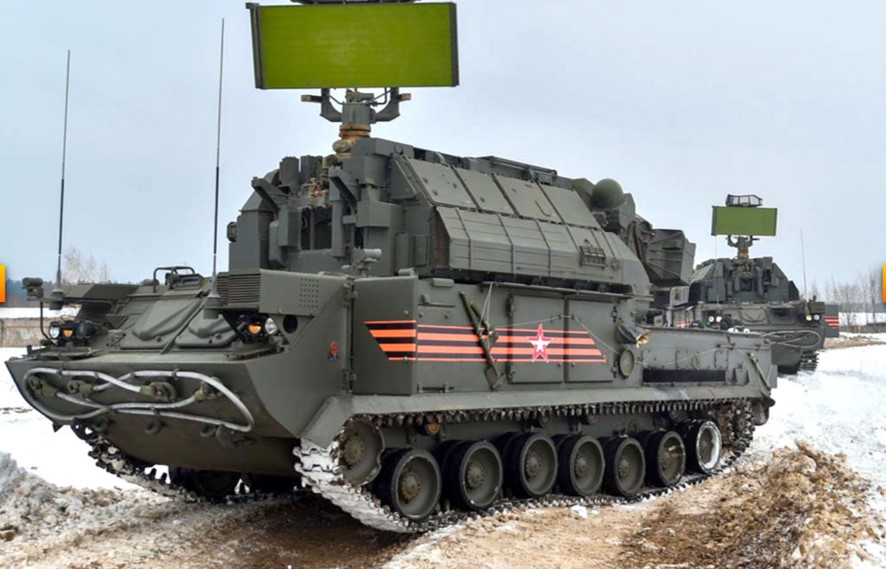
Low to medium altitude, short-range surface-to-air missile
Spotted an error? Sign in to suggest an edit.
Basic Information
Name
9K330 Tor (SA-15 Gauntlet) Russian Short-Range Surface-to-Air Missile System
Designation
9K330 Tor
Alternate Designation
9K330 Tor; NATO: SA-15 Gauntlet
Equipment Type
Low to medium altitude, short-range surface-to-air missile
Manufacturer
IEMZ Kupol Metrowagonmash (GM chassis designer), MZKT (wheeled chassis designer)
Date of Introduction
1986
Description

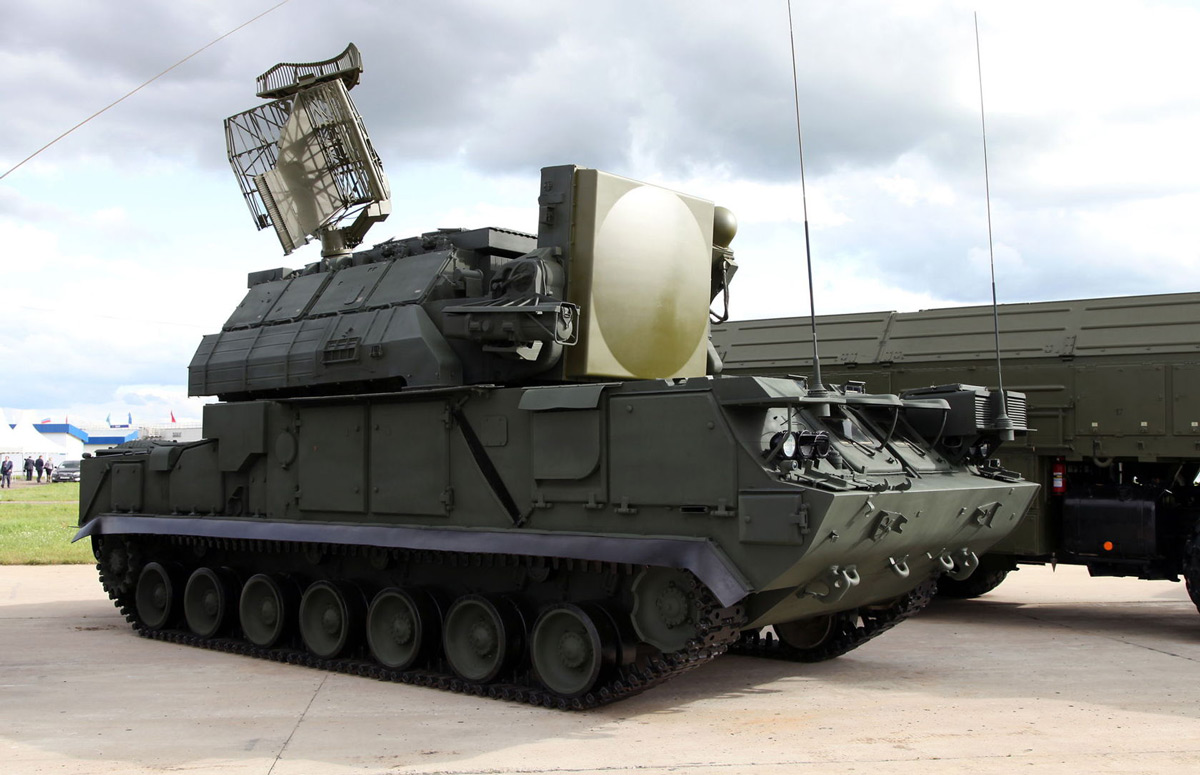
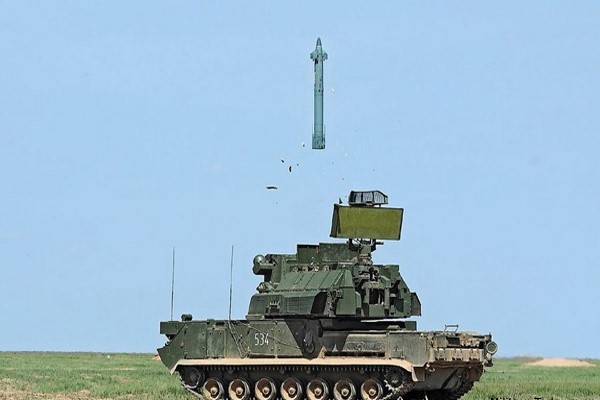
9K330 Tor (SA-15 Gauntlet) Russian Short-Range Surface-to-Air Missile System is a late Cold War-era self-propelled SAM system of Soviet origin. It was developed from 1975 to 1985 by Antei as a replacement for the older 9K33 Osa (SA-8 Gecko). The Tor is also well known under its NATO reporting name SA-15 Gauntlet. Since its introduction, it is regarded as the most capable short-range self-propelled SAM system and continuous upgrades The Tor is one of the few short-range SAM systems with high effectiveness against cruise missiles and precision-guided munitions. Most Tor systems are based on the GM-355 tracked chassis that allows it to keep up with tanks and other armored vehicles through any terrain. A towed version is available which has the advantage of reduced costs. The latest systems are also available on a large MZKT-6922 6x6 truck chassis that is cheaper, offers more internal space, has even better mobility on roads, and still provides protection to the crew. None of the Tor systems are amphibious. The Tor is based on a tracked chassis that protects the crew from small arms fire. The three crew members are seated in the front, an unmanned turret is installed in the middle and the engine and drivetrain are located at the rear. Two boxes with four missiles are installed vertically in the middle of the turret and extend into the hull of the vehicle. The tracking radar is installed at the front of the turret and the optical system is fitted next to it. The search radar is fitted at the rear and is lowered behind the turret when not in use. The search radar rotates when in use and can be used on the move. The medium-sized missiles use radio command guidance and are fitted with folding fins. Upon launch the vehicle comes to a halt, the missile is propelled upwards by a gas charge, is rotated in the correct direction, and then the rocket ignites. The primary means of engaging targets is by radar guidance. Each Tor system is fitted with a 25 km 360-degree search radar and 15 km 60-degree tracking radar. The Tor has a good ECM resistance but can also engage targets by TV tracking. The TV tracking system has a maximum range of 20 km and is fitted with a laser range finder. The naval version uses a similar two-radar setup but has a more powerful search radar.

Ground Specifications
Crew 3
Mobility Type Tracked
Engine Diesel (780 hp)
NBC Protection Yes
Range 25.0 km
Variants
9K330 Tor The project was given strict design specifications to meet; Tor had to provide extended detection and tracking of fast, low radar cross-section targets and be capable of quickly and efficiently dealing with massed air raids while providing a high degree of automation and integration with other air defense assets. In order to meet these demanding specifications, the designers used a variety of new technologies, including advanced Passive electronically scanned array radar for improved detection and tracking performance, enhanced digital information processing, and vertically launched missiles to improve reaction time and increase the number of readily available munitions. After a period of testing and evaluation between December 1983 and December 1984, the land-based system was accepted into service on 19 March 1986.
9K331 Tor-M1 The Tor-M1 is the base variant of the Tor family; it superseded the standard Tor from 1991 and has been widely exported. It is designed to provide point defense and short-range air defense (SHORAD) for ground-based assets from rotary- and fixed-wing assets as well as precision-guided munitions. The combat vehicle itself is designated 9A331.
Tor-M1TA The Tor-M1TA is a paved road-mobile system that mates the launch unit of a Tor-M1 with a truck chassis to provide a more economical version of the Tor-M1 that can be moved with greater ease than the larger tracked systems.
9K331M Tor-M2 The Tor-M2 is a modernized version of the Tor-M1; it is designed to increase the engagement capabilities of the system against complex targets such as unmanned aerial vehicles (UAVs) and cruise missiles, especially in a swarm environment.
9K331M2U Tor-M1-2U The Tor-M1-2U is a precursor to the Tor-M2; it is thought to have introduced as an interim before the Tor-M2 with its improved missiles was introduced.
9K331M2K Tor-M2K The Tor-M2K is an export version of the Tor-M2 based on a wheeled chassis.
9K331MDT Tor-M2DT The Tor-M2DT is designed to provide extreme mobility in the most adverse environments such as the Arctic.
9S737M Ranzhir-M The Ranzhir-M is the battery level command and control vehicle for Tor-M1 and M2 systems.
System
Alternative Designation 9K330 Tor; NATO: SA-15 Gauntlet
Type Low to medium altitude, short-range surface-to-air missile
Manufacturer IEMZ Kupol Metrowagonmash (GM chassis designer), MZKT (wheeled chassis designer)
Family 9K330 Series
In Service 1986-Present
Chassis GM-355 special tracked chassis
Crew 3 ea
Operating Unit Structure The 9K330 Tor is a multiplatform ‘system of systems' (referred to as a ‘complex' in Russian), using a range of launchers, sensors, and supporting assets to operate. It should be noted that in the Russian armed forces, air defense systems are typically deployed in a дивизион (transliterated: ‘divizion' (approximately a battalion set)) or a полк (transliterated: ‘polk' (a regiment)) unit size, with the latter sometimes also referred to as a полковой комплект (transliterated: ‘polkovoj komplekt') in Russian. Tor can be operated as either a battalion set or as a regimental set, depending on which type of formation the Tor formation is subordinate to. A brigade would typically be provided with a battalion set, while a division would typically be provided with a regimental set. For the purposes of understanding the quantities of each involved, in the case of Tor, a ‘divizion' (battalion set) is composed of three batteries, while a regimental set consists of four batteries. It should however be noted in the case of the Tor specifically, that this system does not appear to have been commonly operated as a battalion set, but more frequently as a regimental set. This marks a difference between the Tor and later variants of the Tor family (from Tor-M2E/Tor-M2K export variants or Tor-M1-2U domestic variants onwards), which seem to be more frequently operated as either battalion or regimental sets.
Displacement Time Less than 5 min
Emplacement Time Less than 3 min
Fire on the Move No
Reloading Vehicle Reloading vehicle is based on Ural-4320 6x6 heavy truck
Fully Reload Time 18 Minutes
Note This system can engage a variety of modern air targets as well as engage between 2-4 targets simultaneous depending on model (M1 vs. M2). It is used against aircraft, helicopters, UAVs, various missiles and precision guided munitions. It destroys targets that long- and medium-range air defense systems fail to hit.
Dimensions
Length 8.0 m
Width 3.2 m
Height, Combat Configuration 4.0 m
Weight, Combat 32 tons
Ground Pressure INA
Automotive
Engine Name V-46-2S1
Engine Type Diesel
Engine Power 780 hp
Cruising Range 580 km
Speed, Maximum Road 65 km/h
Speed, Average Cross INA
Speed Maximum Swim Not Amphibious
Gradient 60 %
Side Slope 30 %
Vertical Step 1.0 m
Trench 2.0 m
Fording Depth 1.0 m
Hydropneumatic Suspension Yes
Adjustable Ground Clearance Yes
Communications
HF Radio 1 x R-176 Antey
VHF Radio 1 x Azart-P (4km), 1 x Azart-N (12km), and 1 x Azart-BM (40km)
Main Weapon System
Missile Launcher
Name 9A331 Combat Vehicle
Type Vertical Launch
Missile
Name 8x 9M330 Surface-to-Air Missile (SAM)
Type Surface-to-Air Missile (SAM)
Length 2.89 m
Diameter 0.23 m
Wingspan 650 mm
Weight 165 kg
Engine thruster jets with 2-stage solid-fuel rockets
Warhead Type HE-FRAG
Warhead Weight 14.8 kg
Maximum Range 12.0 km
Minimum Range 1.5 km
Maximum Altitude 6 km
Minimum Altitude 10 m
Guidance System Radio Command Guidance System
Kill Probability against Helicopters 50-88%
Kill Probability against Aircraft 26-75%
Kill Probability against UAVs 85-95%
Maximum Speed Mach 3
Maximum Target Speed 3,060 kph
Load Limit 30 Gs
Fuze Type RF proximity
Detonation Mechanism RF Proximity
Propellant Solid-fuel rocket
Boost time Cold launch ejection for 20 m
Steering system Gas dynamic control system, with four control surfaces
Basic Load 8x 9M330 Surface-to-Air Missile (SAM)
Note The higher the target the higher the probability to hit the target.
Fire Control
Note The Tor combat vehicle has radar and missiles based on a single vehicle.
Fire Control System
Name INA
Computerized FCS Yes
Fire Control Radar J/K-band
Fire Control Sensors Yes
IADS Integration INA
Reaction Time (Target Detection to Launch) 8-12 seconds
Target Detection Radar
Name Scrum Half
Type 3D Pulse Doppler
Maximum Detection Range against Aircraft 25-27 km
Maximum Detection Range against Helicopters 12 km
Maximum Detection Range against UAVs 9-15 km
Search for Targets on the Move Yes
Detect and Intercept Anti-Radiation Missiles Yes
Coverage up to 48 targets
Surveillance Band G/H-band
Minimum Detection Altitude 100 m
Protection
Hull Armor All-welded steel
Turret Armor All-welded steel
Applique Armor No
Explosive Reactive Armor No
Active Protection System INA
Mine Clearing No
Self-Entrenching Blade No
NBC Protection Yes
Smoke Equipment INA
Air-Transportable Yes
IFF Yes
Details
Country of Origin Russia
Category Short-Range Missile Systems (Less than 30 km)
Land > Air Defense > Short-Range Missile Systems (Less than 30 km)
Filter Label
9
Classification
Domain
Ground
Equipment Status
Active
Dimensions
Length
8 m
Width
3.2 m
Height
Weight
32000 kg
Operators (17)
Russia
China
Ukraine
Iran
Belarus
Algeria
Armenia
Azerbaijan
Cyprus
Egypt
Greece
Morocco
Myanmar
Peru
Syria
Turkmenistan
Venezuela
Something went wrong. Please reload the page. Reload