ARMSNET
Military Equipment Database
Initializing 0%

Bv 206 Swedish Articulated All-Terrain Tracked Carrier

Bv 206
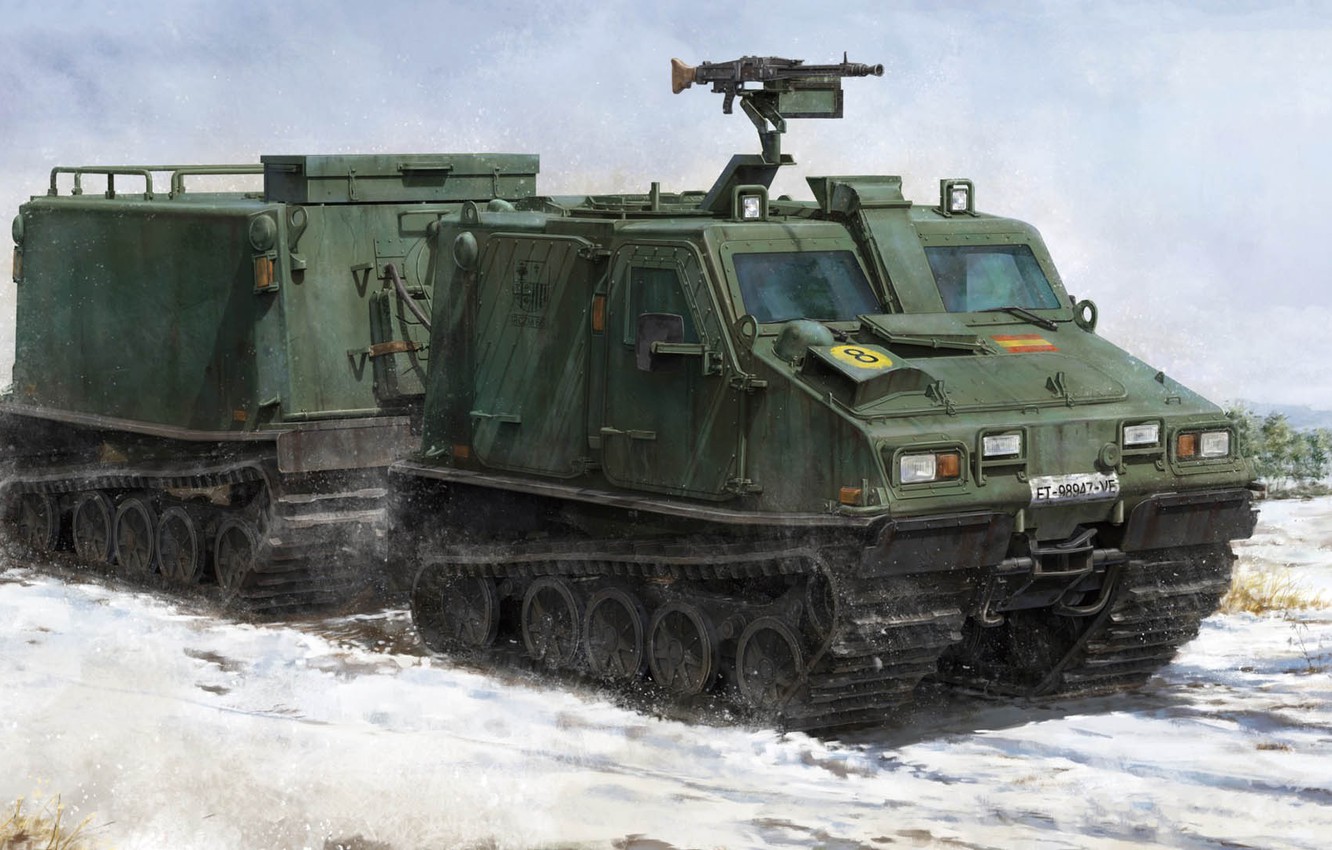
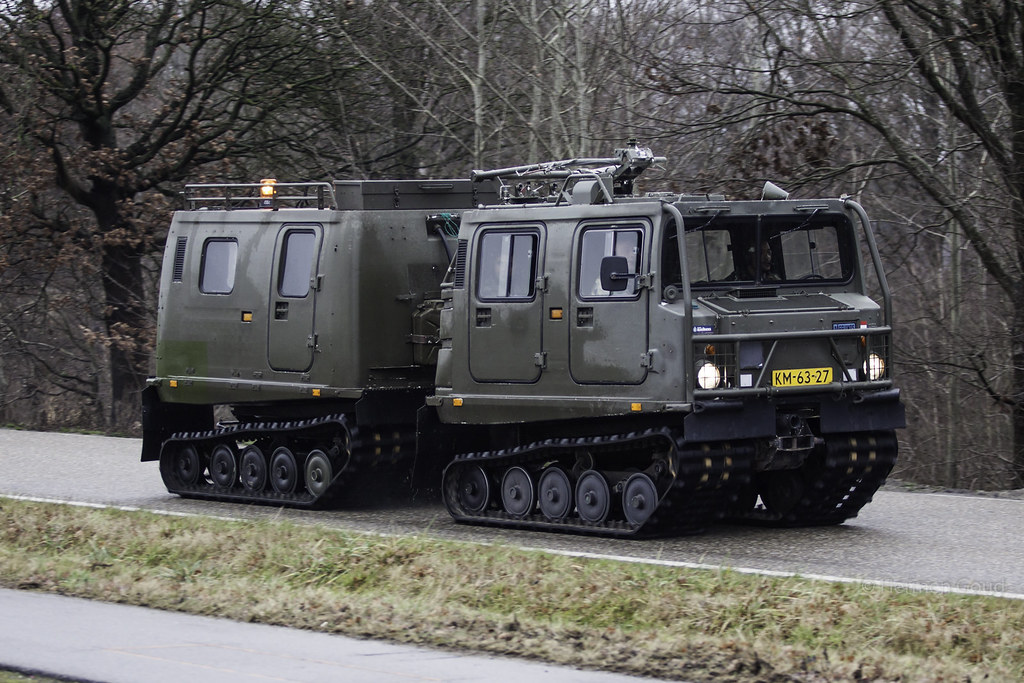
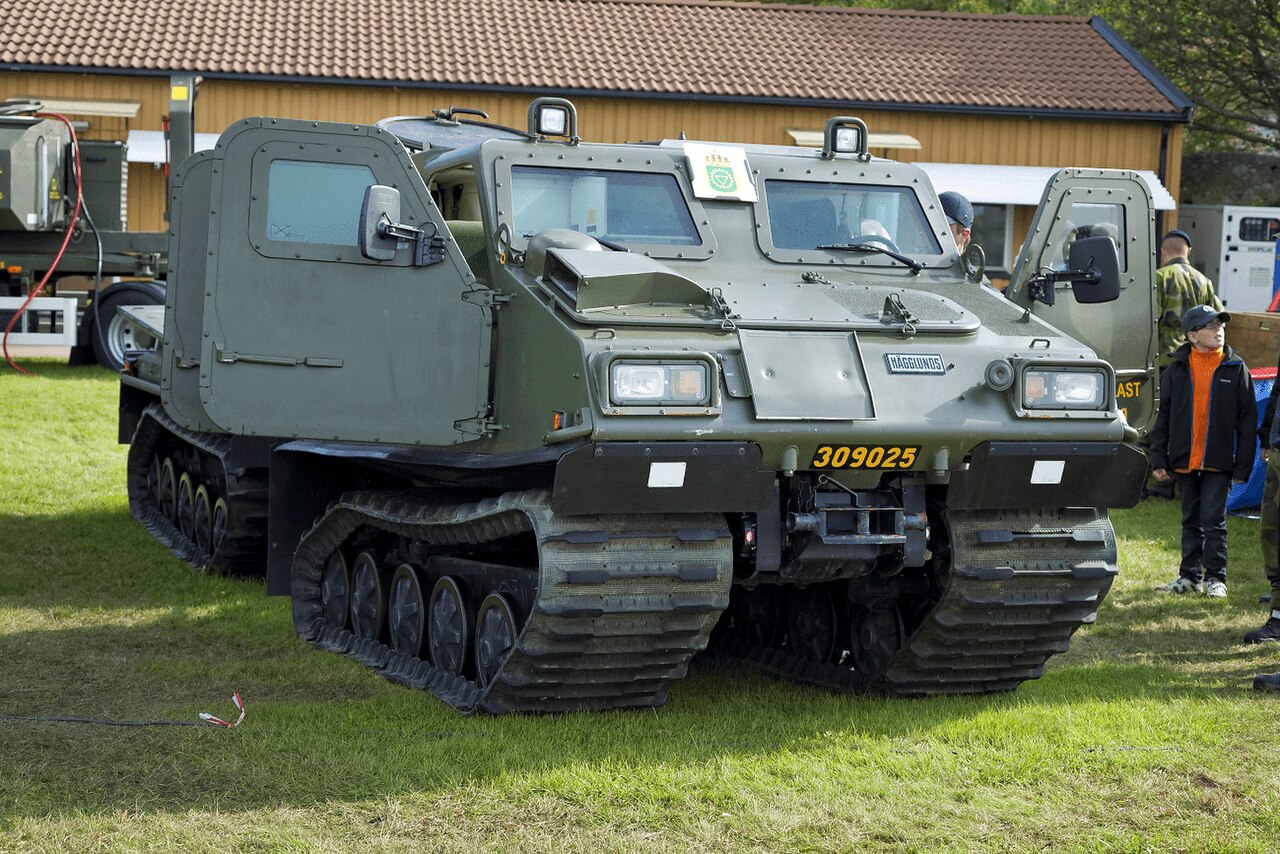
Amphibious, all-terrain, articulated tracked carrier
Spotted an error? Sign in to suggest an edit.
Basic Information
Name
Bv 206 Swedish Articulated All-Terrain Tracked Carrier
Designation
Bv 206
Alternate Designation
Bv 206; Small Unit Support Vehicle (SUSV)
Equipment Type
Amphibious, all-terrain, articulated tracked carrier
Manufacturer
Hagglunds
Date of Introduction
1980
Description

Development of the Bv 206 articulated all-terrain tracked carrier began in 1974. Three batches of trial vehicles were delivered between 1976 and 1978 and the first production examples were delivered to the Swedish Defense Administration in 1980. Since then the Bandvagn 206 has been produced in thousands by Hagglunds and is in service all around the world. It is a family of multi-purpose amphibious tracked vehicles. The Bv 206 is widely used, especially by the Swedish armed forces, the US Army (who have developed a desert version), the British Armed Forces, and the German Army (who use only diesel-engined versions). The type has been license-produced in Chile. The Bv 206 in its basic carrier form is a twin-unit articulated tracked vehicle that can carry up to 17 troops or 2 250 kg of supplies (6 troops or 630 kg in the front unit, 11 troops, or 1 620 kg in the rear unit). Normally both front and rear units are fully enclosed but for some applications, the rear unit can vary considerably and in some cases is left fully opened, such as the mortar carrier, or can accommodate a variety of bodies. From the earliest stage the Bv 206 was designed to be versatile and it has been proven so in service. The engine originally a Ford V6 petrol unit but later a Mercedes-Benz diesel is in the front unit together with the automatic transmission. Connection to the rear unit is made via an articulated joint which is also used for steering. It gives great flexibility in all axles and extremely good maneuverability. The simplicity in the handling of the vehicle involves a minimum of driver training. Most bodies make extensive use of light plastic-based materials but the chassis uses light alloys. Power is driving on all four of the tracks, which exerts a ground pressure of less than half of the man's foot. The Bv 206 can negotiate such obstacles as soft snow, drifting sand, and marshlands. It can climb considerable gradients, swim without preparation, and work in arctic cold or in tropical heath. The vehicle can be airdropped and transported by a variety of aircraft and helicopters. Variants of the basic Bv 206 abound. It is used as an alight artillery tractor, an ambulance, a communication or command post, to carry various anti-tank weapons such as the Bofors BILL or TOW, for ground-to-air missile systems such as Bofors RBS 90, and even to carry radar systems. An armored variant of the Bv 206 is the Bv 206S. It has modified cabs and armor plating on all its bodywork. A recent member of the Bv 206 family is the BvS 10 improved armored version. It is a new larger vehicle, with improved load capacity. The BvS 10 has the same superior mobility in difficult terrain, combined with the same speed on road. In 2015 BAE Systems Hagglunds revealed a new BvS 10 Beowulf. It is proposed as a replacement of the Bv 206. The new vehicle can carry more than 3 times more payload.

Ground Specifications
Crew 2
Mobility Type Tracked
Main Weapon 90 mm Pvpj 1110 recoilless anti-tank gun
Active Protection None
NBC Protection Yes
Variants
Bv 206A Ambulance version, which is capable of carrying stretchers in the rear compartment.
Bv 206F Firefighting vehicle.
RaBv 2061 (Command, Control and Communications) Swedish Army communications/command version, fitted with radio equipment and workplaces for staff members. The high payload of the Bv 206 permits the installation of a very wide range of specialist equipment. For instance, a radar vehicle has a special generator and a Saab Systems Giraffe 50 AT C-band search radar with an instrumented range of 50 km and a mast height of 7 m. A radio jamming vehicle is equipped with a separate jamming generator driven by the main engine, generating 15 kVA. The antenna is mounted on an 18 m rapidly erected mast. A radio locating vehicle is equipped with radio intelligence and direction-finding systems. The antenna is mounted on an 18 m telescopic mast. Equipment in a radio relay vehicle consists of either VHF or UHF multichannel radios for automatic relay transmission. The rear vehicle carries spare batteries and a 3 kVA diesel-driven power unit. There is also a 20 m antenna mast for ground or vehicle mounting. The Bv 206 is also used as a carrier for the Saab Systems Arthur weapon locating radar system. This is now used by at least six countries. Some use the Bv 206 while others use a truck. The British Royal Artillery deploy the Bv 206 fitted with the Arthur locating the radar that in UK service is referred to as the Mamba.
PvBv 2062 Swedish Army anti-tank vehicle, an open top version of the Bv 206 armed with a 90 mm Pvpj 1110 recoilless anti-tank gun.
PvBv 2063 Swedish Army anti-tank vehicle, similar to PvBv 2062, but fitted with the launch system for an ATGM, either the TOW (Rbs 55) or the Bofors BILL (Rbs 56).
Bv 206S / Bv S7 The Bv206S is an armored personnel carrier variant of the Bv 206, which provides protection from small arms fire for the occupants. It is in service with the armed forces of France, Germany (379 Bv 206D/S ordered), Spain, Netherlands, Italy (189 units), Sweden (50 units), Greece (Bv 208), and Singapore (300 units), which has replaced it with the Bronco All Terrain Tracked Carrier. Using a Steyr M1-"Monoblock" engine (6-cylinder, 130 kW), the vehicle can carry the driver and 12 combat-equipped troops — four in the front compartment and eight in the rear. The Bv 206S can be sling loaded by Boeing CH-47 Chinook and Sikorsky CH-53E Super Stallion helicopters or carried in the C130 Hercules.
Bv 308 / Bv 309 In 2010, the Swedish Army deployed a total of 93 Bv 206S under the designation of the Bv 309 with the earlier Bv 308 used for training.
SUSV In 1983, the US Army Tank-Automotive Command (TACOM) awarded a USD24.2 million contract for 268 Bv 206 all-terrain carriers (plus an option for a further 34, later exercised) known as the Small Unit Support Vehicle (SUSV). The contract followed a period of extensive trials carried out using a small batch of vehicles at the Cold Regions Test Center at Fort Greely, Alaska. Most of the vehicles involved in the contract, delivered from Sweden in 1983 and 1984, were issued to the US Army's 172nd Infantry Brigade in Alaska and the Alaskan National Guard. Early M973 SUSVs were powered by three-liter four-stroke, five-cylinder in-line diesel engines developing 125 hp at 4,500 rpm. Vehicles delivered after 1987 are powered by a Mercedes-Benz six-cylinder turbocharged diesel engine developing 136 hp at 4,500 rpm. There are four basic SUSV variants: M973/M973A1 cargo carrier, M1066 ambulance, M1067 flatbed, and M1067 command-and-control vehicle. The M973/M973A1 has a payload of 1.5 tonnes (US), while the M1067 has a payload of two tonnes (US). In 1988 the US Army ordered a further 390 M973 SUVs, and these were delivered from 1989. Continued purchases until 1992 resulted in a total fleet of approximately 1,100 vehicles. As of March 2017, no replacement had been announced for the Bv206 used by the US Army.
System
Alternative Designation Bv 206; Small Unit Support Vehicle (SUSV)
Type Amphibious, all-terrain, articulated tracked carrier
Bodies Fiberglass reinforced with PVC foam insulation
Crew 2 ea
Passenger Capacity 7 troops or 2 250 kg of supplies (6 troops or 630 kg in the front unit, 11 troops or 1 620 kg in the rear unit).
Dimensions
Height, Overall 2.4 m
Length, Overall 6.9 m
Width, Overall 1.87 m
Cargo Space, Front 2.5 m3
Cargo Space, Rear 5.5 m3
Track Width 620 mm
Ground Pressure 11.6/13.6 kPa (1.68/1.97 PSI)
Curb Weight 4.5 tons
Gross Vehicle Weight 6.58 tons
Payload 2.24 tons (630 kg in front compartment and 1610 kg in rear compartment).
Trailer Load 2.5 tons
Automotive
Engine Name Ford Cologne V6 gasoline, or Mercedes Benz turbodiesel
Engine Power 115 hp
Range, Cruising 300 km
Speed, Maximum Road 55 km/h
Speed, Maximum Swim 3 km/h
Fording Depth Amphibious
Grade, hard surface 60 %
Grade, Deep Snow 30 %
Turning Radius 8 m
Main Weapon System
Note Variants of the basic Bv 206 abound. It is used as an alight artillery tractor, an ambulance, a communication or command post, to carry various anti-tank weapons such as the Bofors BILL or TOW, for ground-to-air missile systems such as Bofors RBS 90, and even to carry radar systems.
Protection
Armor Depends on the Variant. An armored variant of the Bv 206 is the Bv 206S. It has modified cabs and armor plating on all its bodywork. A recent member of the Bv 206 family is the BvS 10 improved armored version. It is a new larger vehicle, with improved load capacity. The BvS 10 has the same superior mobility in difficult terrain, combined with the same speed on road.
Armor, Applique Available
Armor, Explosive Reactive No
Active Protection System No
NBC Protection Yes
Smoke Equipment Yes
Details
Country of Origin Sweden
Category Tracked All-Terrain Vehicles
Land > All-Terrain Vehicles > Tracked All-Terrain Vehicles
Filter Label
B
Classification
Domain
Ground
Equipment Status
Active
Operators (14)
United States
France
Germany
United Kingdom
Italy
South Korea
Ukraine
Sweden
Canada
Chile
Iceland
Latvia
Netherlands
Greenland
Something went wrong. Please reload the page. Reload